What Are Tinctures? #
Tinctures are the colors, metals, and furs used in heraldry. The term comes from the limited palette of colors medieval artists had available—and more importantly, the colors that worked best for their purpose: instant recognition from a distance. How tinctures can be assigned is set in the Rule of Tincture, one of the fundamental rules of heraldry.
In heraldry, while each Tincture name corresponds to a specific Color category, the exact shade Or tone used to depict that Tincture is up to the artist’s interpretation and may vary between different renditions of the same coat of arms. Importantly, changing the tone Or shade of a Tincture—such as making red lighter Or darker—does not alter its heraldic identity Or meaning.
This means a single coat of arms can be represented through different artistic interpretations of its tinctures without changing its heraldic significance. Conventions and guidelines offered by heraldic authorities Or communities provide typical portrayals to maintain consistency, but flexibility for visual variation remains a key part of heraldic art.
Look at the example below. The red is different in both coats of arms but always using the same type of red for the Field and the tongue of the lion. Which type of red to choose is the decision of an artist.
The standard heraldic palette consists of nine tinctures, divided into three categories:
The Two Metals
The Five Colors
The Two Furs
Or (gold/yellow) is named from the Latin aurum, meaning gold. In heraldic art, you can depict it as either metallic gold Or bright yellow—there’s no separate “yellow” in heraldry. Whether you render it as shimmering gold leaf Or flat yellow paint, it’s still blazoned as “Or”.
Argent (silver/white) comes from the Latin argentum, meaning silver. While sometimes shown as metallic silver Or pale grey, it’s more commonly depicted as pure white. This practical choice arose partly because silver paint tends to darken over time, and partly because white provides stronger contrast. In practice, Argent and white are interchangeable—both work equally well for clear, readable designs.
The Colors: The Core Five #
Gules (red) gets its name from the French gueules, meaning throat Or jaws. It’s the heavyweight champion of heraldic colors—bold, eye-catching, and impossible to ignore. You’ll see red more than any other Color in coat of arms design.
Azure (blue) traces its roots through Arabic back to Persian, where it originally referred to lapis lazuli, the precious blue stone ground into pigment. After red, blue claims second place as heraldry’s most popular Color, showing up everywhere from medieval shields to modern national flags.
Vert (green) takes its name from the Latin viridis. Medieval European heralds didn’t use green as often as other colors, but it gained popularity in later centuries.
Sable (black) borrows its name from the Sable marten, a small animal hunted for its luxurious dark Fur.Â
Purpure (purple) comes from Latin purpura, referring to the notoriously expensive Tyrian purple dye. The high cost of this dye made purple a status symbol throughout antiquity and the Middle Ages. One quirk worth noting: historical purple in heraldry often leaned more toward red than the blue-purple we typically use today.
Occasionally you’ll encounter three additional tinctures called Stains: tenné (orange-tawny), murrey (mulberry/reddish-purple), and sanguine (blood-red). These non-standard colors appear rarely in heraldry and were sometimes associated with marks of dishonor, though this interpretation is debated.
In practice, Stains have limited use. Most heraldic authorities treat them as curiosities rather than standard design elements.
Beyond the standard metals, colors, and furs, some heraldic traditions recognize other less common tinctures used in specific contexts Or regions. These include:
- Bleu celeste (sky blue): A lighter, less common blue than the typical Azure. Bleu celeste is sometimes treated almost like a separate Tincture, even occasionally considered a Metal due to its light shade.
- Brunâtre (brownish): Found in some continental heraldic traditions as a substitute Or variation, especially in German heraldry.
- Cendrée (ashen grey): An uncommon Tincture representing an ash-like grey, used chiefly in continental heraldry.
- Carnation (flesh Color): Often seen in French heraldry to represent human skin tones.
- Rose (pink): Used particularly in Canadian heraldry.
- Orange (often tawny Or dark yellow): Appears sporadically in Dutch and some South African heraldry.
Furs are patterns that function as tinctures. They originated from actual animal pelts used to line royal robes and ceremonial garments.
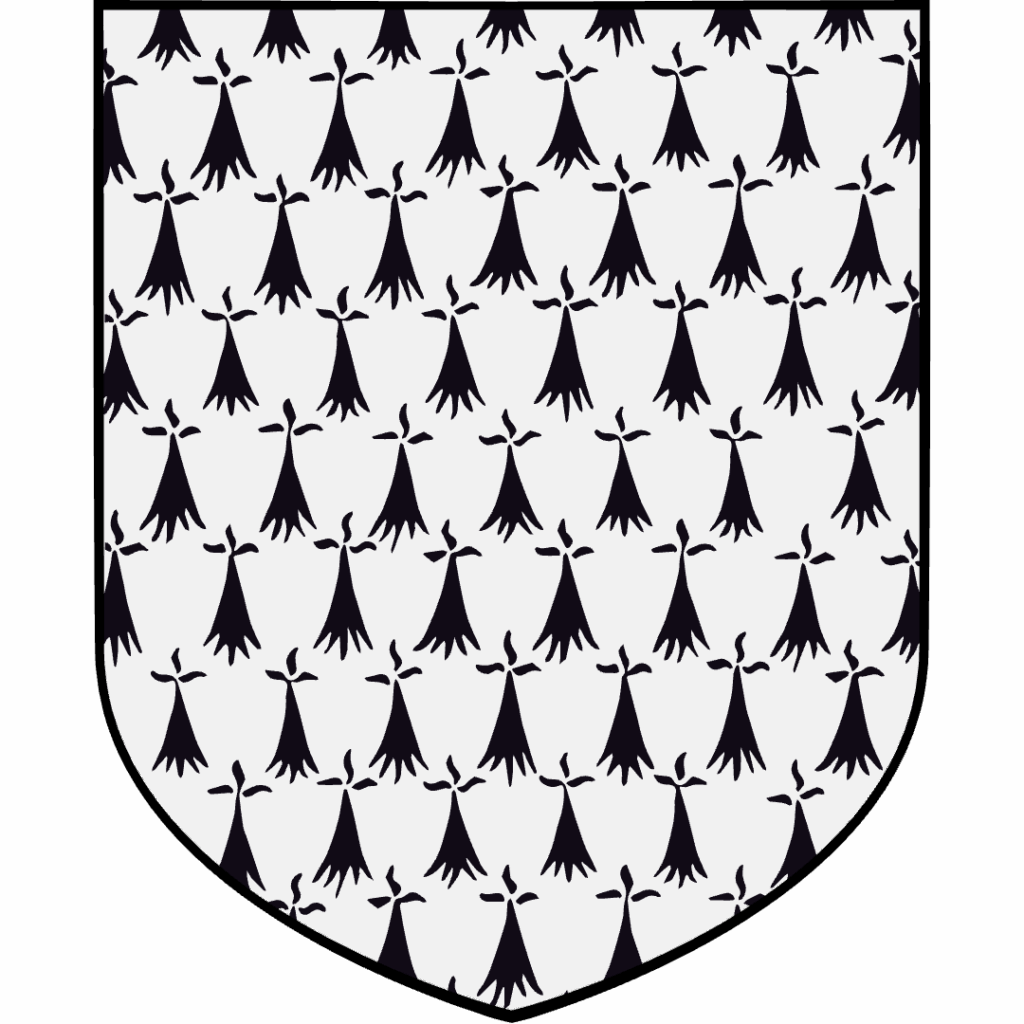
Ermine represents the white winter coat of the stoat, with its distinctive black tail tip. In heraldry, Ermine appears as a white Field dotted with black shapes representing these tails. Because real Ermine Fur lined coronation robes and royal mantles, heraldic Ermine became strongly associated with sovereignty and high nobility. It’s particularly connected to Breton heraldry and the Duchy of Brittany.
Ermine has several variations:
Ermine: white background with black spots (the standard)
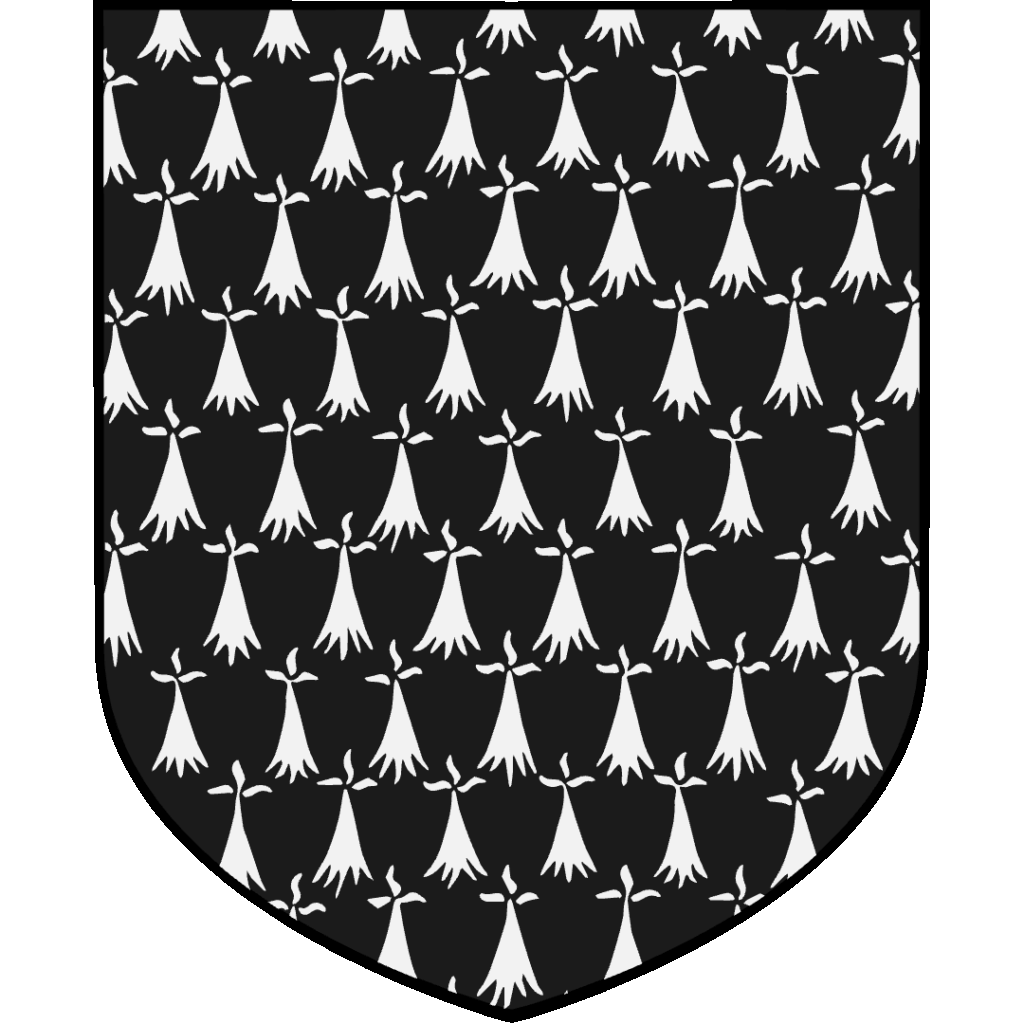
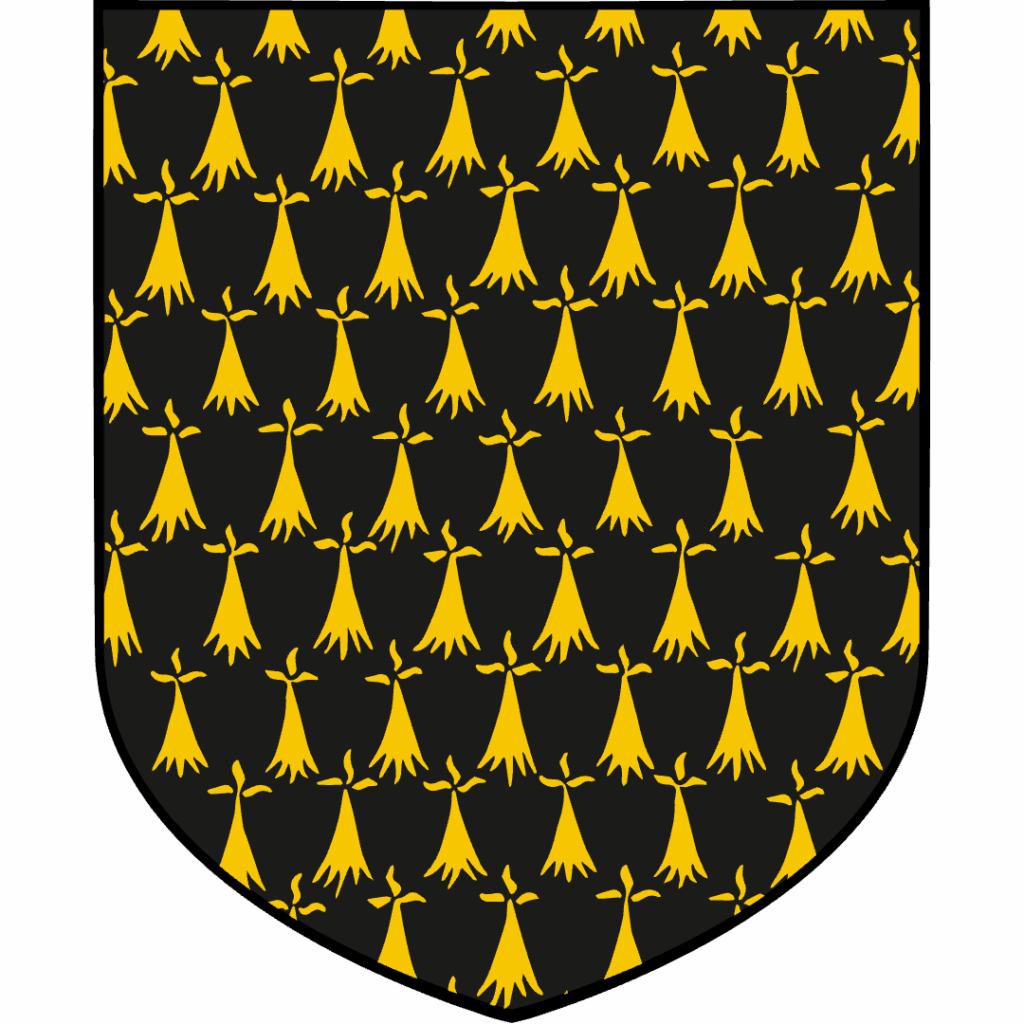
Counter-ermine (Or ermines): black background with white spots
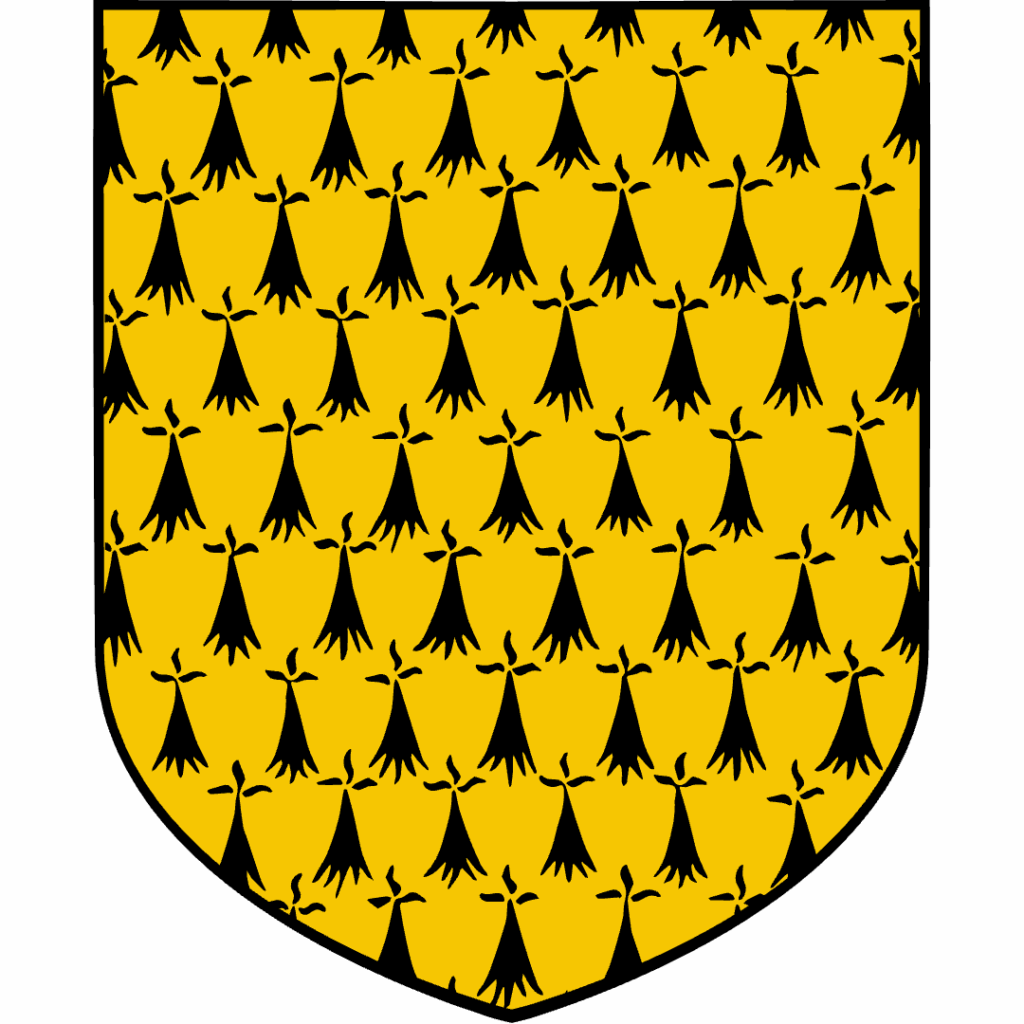
Erminois: gold background with black spots
Pean: black background with gold spots
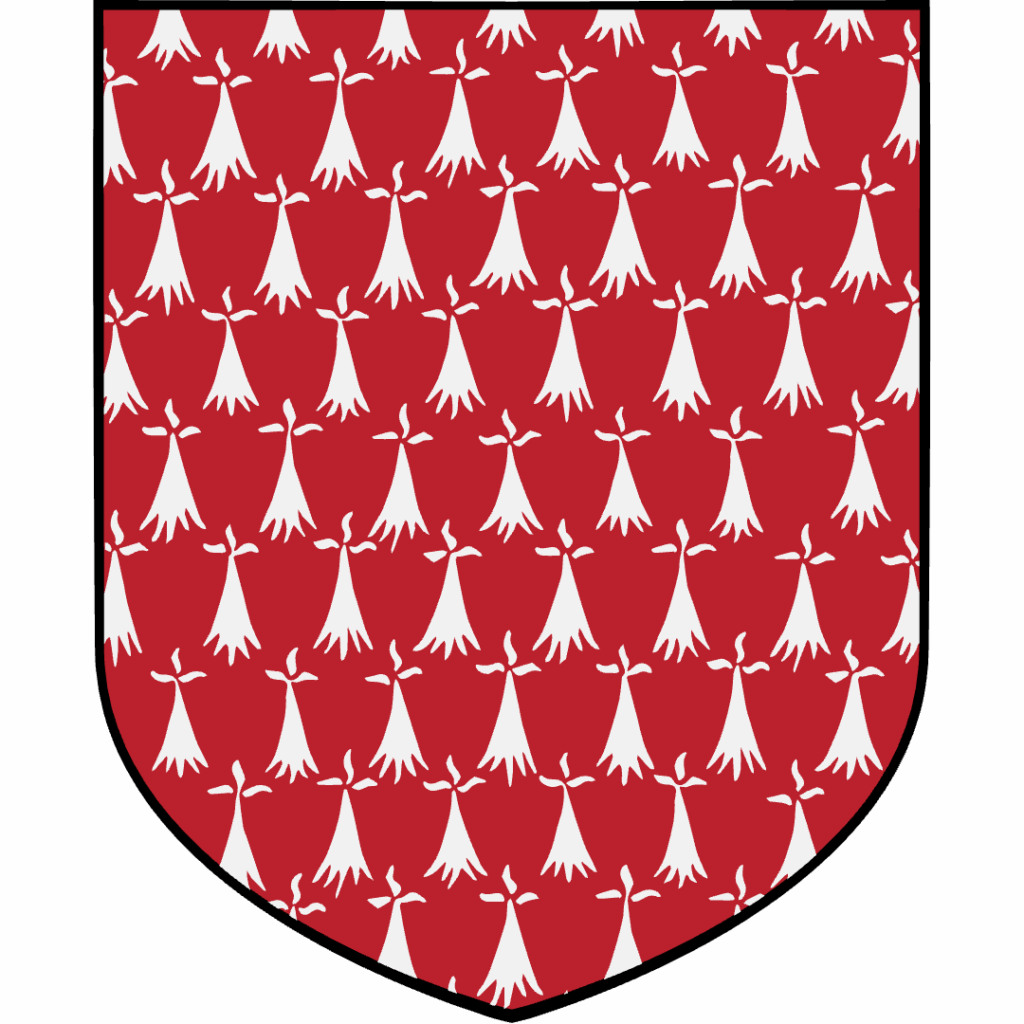
You can also create custom Ermine variants by combining any Metal and Color that provide good contrast, blazoned as “[background Tincture] ermined [spot Tincture]”. For example, “Gules ermined Argent” would be red with silver spots.
For contrast purposes, you can use Ermine like a Metal (since its background is white), while Counter-ermine and pean can be used like colors (black backgrounds).
Vair represents squirrel pelts, specifically the blue-grey backs and white bellies arranged in an alternating pattern. It appears as rows of bell-shaped panes, alternating between Argent and Azure. Vair functions as a neutral Tincture since it contains both Metal and Color.
Like Ermine, Vair has variations. When you use colors other than the standard blue and white, it’s called vairé Or vairy, blazoned as “vairy [first Tincture] and [second Tincture]”. One must be a Metal and the other a Color to maintain contrast.
Furs add texture and visual interest to your designs without introducing additional colors. They work particularly well for linings, borders, Or as Field backgrounds.
You’ll often encounter elaborate symbolic systems associating tinctures with virtues, planets, gemstones, and elements. Gold for generosity, silver for sincerity, red for courage, blue for loyalty, and so on.​​
Here’s the truth: these associations developed centuries after heraldry’s origins, mostly between the fifteenth and seventeenth centuries. They’re not consistent across regions Or time periods. In contemporary heraldry, tinctures aren’t assigned particular inherent meanings.​
That doesn’t make these associations useless for worldbuilding. Medieval people believed these connections, and those beliefs influenced how they chose colors. If you’re creating a realistic medieval-inspired setting, incorporating these symbolic meanings adds authenticity.​
More importantly, you can create your own Color symbolism for your fantasy world. Maybe in your setting, purple represents not royalty but magical aptitude. Perhaps green indicates not hope but religious devotion to a forest deity. The structure of heraldry—its metals, colors, and furs—remains constant. The meanings you assign are yours to determine.​
Choosing Your Tinctures: Practical Design Tips #
When you sit down to design in CoaMaker, how do you choose which tinctures to use?
CoaMaker offers a selection of pre-made Color palettes with themed twists to inspire your designs, including the crisp and clear CoaMaker Default, and artistic options like Forgotten Realm, Rokoko Romance, Splendor Palace, and Vampire Castle. You can also create your own custom Color palette. To maintain consistency in your heraldic design, all colors used on the canvas appear in the Color picker, so your chosen interpretation of each Tincture stays uniform throughout.
Start with two: Every coat of arms needs at least two tinctures—one Metal and one Color. This ensures contrast and follows the Rule of Tincture. A simple two-Tincture design is often more effective than a complex multicolor one.
Think about visibility: Choose combinations with strong contrast. Azure and Or (blue and gold) is a classic pairing that works at any distance. Gules and Argent (red and white) is bold and unmistakable. Vert and Or (green and gold) is rich and elegant.
Consider symbolism: What does your faction, house, Or character represent? Martial prowess might call for red. Wisdom and learning might suggest blue. Natural themes work well with green. Let the symbolism guide your initial choices.
Limit your palette: While there’s no hard rule about how many tinctures you can use, restraint creates stronger designs. Three Or four tinctures is usually the maximum for visual clarity. More than that risks becoming busy and chaotic.
Use furs strategically: Ermine and Vair add complexity without introducing new colors. They’re excellent for borders, divisions of the Field, Or as backgrounds for simple charges. They also carry strong aristocratic associations if you want to signal high status.
Test in grayscale: A good heraldic design works in black and white. If your design becomes unclear when you remove Color, you need better contrast.
Tinctures in Fantasy Worldbuilding #
For your fantasy projects, tinctures offer creative opportunities beyond historical heraldry.
Create cultural variations: Perhaps one culture in your world only uses warm colors (red, orange, yellow) while another prefers cool colors (blue, green, purple). Maybe a particular Metal is sacred and appears on all arms from that region.
Establish symbolic systems: You’re not bound by medieval European Color meanings. Define what each Tincture represents in your world’s culture. This adds depth and makes heraldic choices meaningful rather than arbitrary.
Use tinctures to show relationships: Houses that share a Tincture might be allied Or share ancestry. Inverted tinctures (same charges, opposite colors) could indicate rival branches of a family.
Consider availability: In a low-magic medieval setting, purple dye might be genuinely rare, making Purpure uncommon on arms. In a high-magic setting, perhaps fantastical colors like iridescent tinctures Or glowing metallics exist.
Make violations meaningful: If the Rule of Tincture is standard in your world, deliberate violations become significant. Metal-on-Metal arms might mark prophesied rulers Or cursed bloodlines.
The structured palette of heraldry—metals, colors, and furs—gives you a framework. How you fill that framework defines your world.